SET ELEMENTS
27 January, 2026
Today’s subject matter is set elements. Now, just because it’s an addition doesn’t make it expensive. Simple set elements can add dynamics, and color, and vibrance to any general session. Especially these days, when presenters like to wear black, and against black drapes, you get what we call the “floating head.”
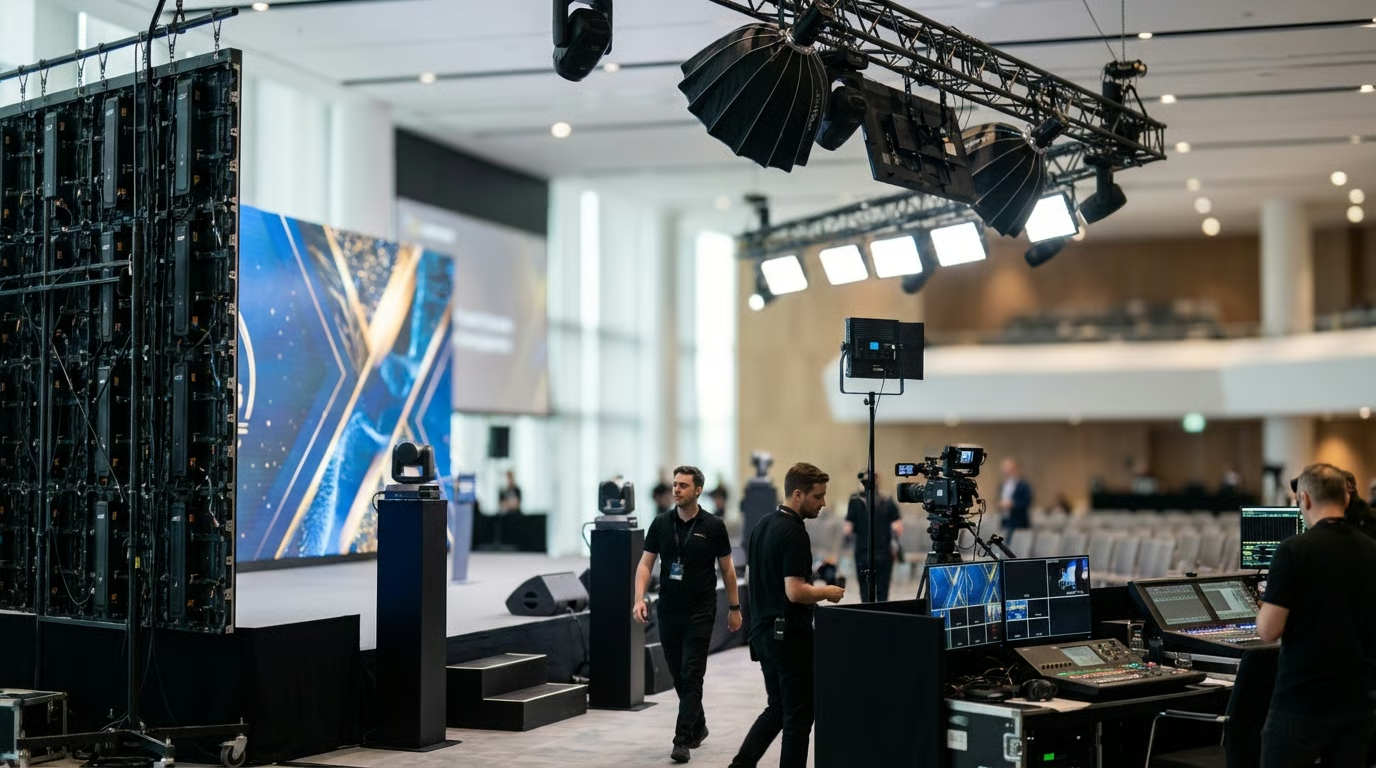
The Floating Head Problem and How Simple Set Elements Fix It Every seasoned event producer has seen it happen. A senior executive steps onto the stage in their favorite black suit, stands in front of black drapes, and suddenly transforms into a disembodied face hovering in darkness. The audience squints. The camera operator scrambles. The credibility of your carefully planned general session takes an unnecessary hit. This is not a lighting problem. It is a staging problem. And it has a straightforward solution that costs far less than most corporate event planners assume.
Why Black on Black Fails Your Presenters Corporate presenters gravitate toward black. It is professional, slimming, and universally appropriate. Nobody is going to ask your CEO to change into a chartreuse blazer for the sake of stage visibility. The problem emerges when that sensible wardrobe choice meets a production design built entirely on black draping. Without visual separation between the speaker and the background, your audience loses the ability to read body language, perceive depth, or stay visually engaged over extended sessions. The human eye craves contrast. When you eliminate it, you create cognitive fatigue. Your audience may not consciously register what is wrong, but their attention will wander faster than it should.
Set Elements Are Not a Budget Line Item to Fear Here is where many planners make a costly assumption. They hear the phrase "set design" and picture elaborate custom builds that require dedicated trucks and specialized crews. They imagine a conversation with their CFO that does not go well. The reality is different. Simple set elements often fall within reach of budgets that would otherwise go toward incremental catering upgrades or branded tchotchkes that end up in hotel trash bins. What qualifies as a simple set element? Consider spandex sails, which are lightweight fabric panels stretched across frames that catch light beautifully and add architectural dimension to any stage. A basic upstage screen displaying subtle branded visuals or ambient imagery creates immediate depth. Modular panels, available in various finishes from matte to reflective, can be configured in countless arrangements and reused across multiple events. None of these require a design degree to implement. All of them require proper lighting to reach their potential.
The Lighting Relationship Most Planners Overlook A set element sitting unlit in front of black drapes accomplishes almost nothing. The magic happens when your production team understands how to treat these surfaces. When a spandex sail is washed with colored light, it becomes a dynamic visual anchor that shifts with the program's emotional beats. When modular panels receive textured gobo patterns, they create the impression of a much more elaborate environment. When even a simple rear screen displays slowly moving gradients, your presenters gain the visual separation they need to command attention. This relationship between element and illumination is where production expertise becomes essential. The set piece itself is often the smaller investment. The knowledge of how to light it properly is what transforms a few hundred dollars of fabric or acrylic into a stage that photographs like a network broadcast.
The Practical Path Forward If your next general session features presenters in dark attire and your current production plan consists of pipe and drape, you have an opportunity sitting in front of you. Start by asking your production partner what options exist within your existing budget. Many times, the gear is already on the truck for other purposes and can be deployed with minimal additional cost. If you are working with a team that knows how to maximize resources, you may be surprised by what becomes possible. If you are not yet working with a production partner who thinks this way, that is worth examining. The difference between a vendor who fills your technical rider and a partner who actively improves your event shows up in moments exactly like this one.
What This Means for Your Attendees The attendee experience is not built from any single production element. It accumulates from dozens of small decisions that either support engagement or erode it. When your stage has visual depth, your presenters appear more authoritative. When the lighting creates atmosphere, your audience feels the intended emotional tone. When the technical execution is invisible because everything simply works, your content gets the reception it deserves. Set elements are not about making your event look expensive. They are about making your event look intentional. That distinction matters to the sophisticated audiences that fill corporate general sessions, leadership summits, and annual conferences.
The Conversation Worth Having Before your next event, ask a simple question. What would it take to add one thoughtful set element to our general session stage? The answer may reshape how you think about production budgets, design possibilities, and the visual experience you deliver to your most important stakeholders. If you want to explore specific ideas tailored to your upcoming program, the MMPAV team is available to walk through options. No elaborate proposals required. Sometimes the most valuable conversations start with a single question about what might be possible.
MMPAV is a corporate event production company serving organizations that refuse to leave high-stakes events to chance. We work with leadership teams, marketing organizations, and professional planners who understand that production quality reflects organizational quality.