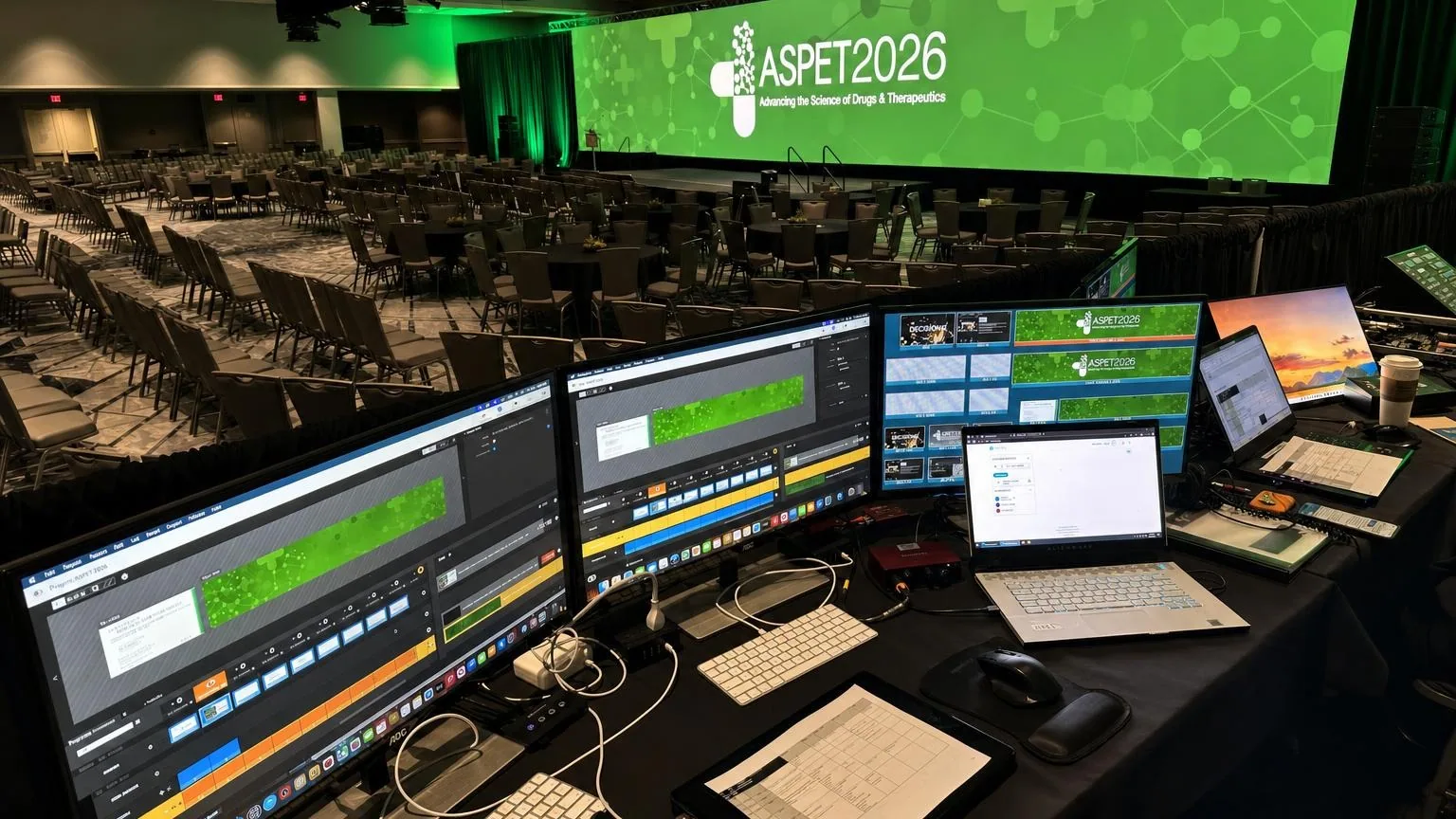
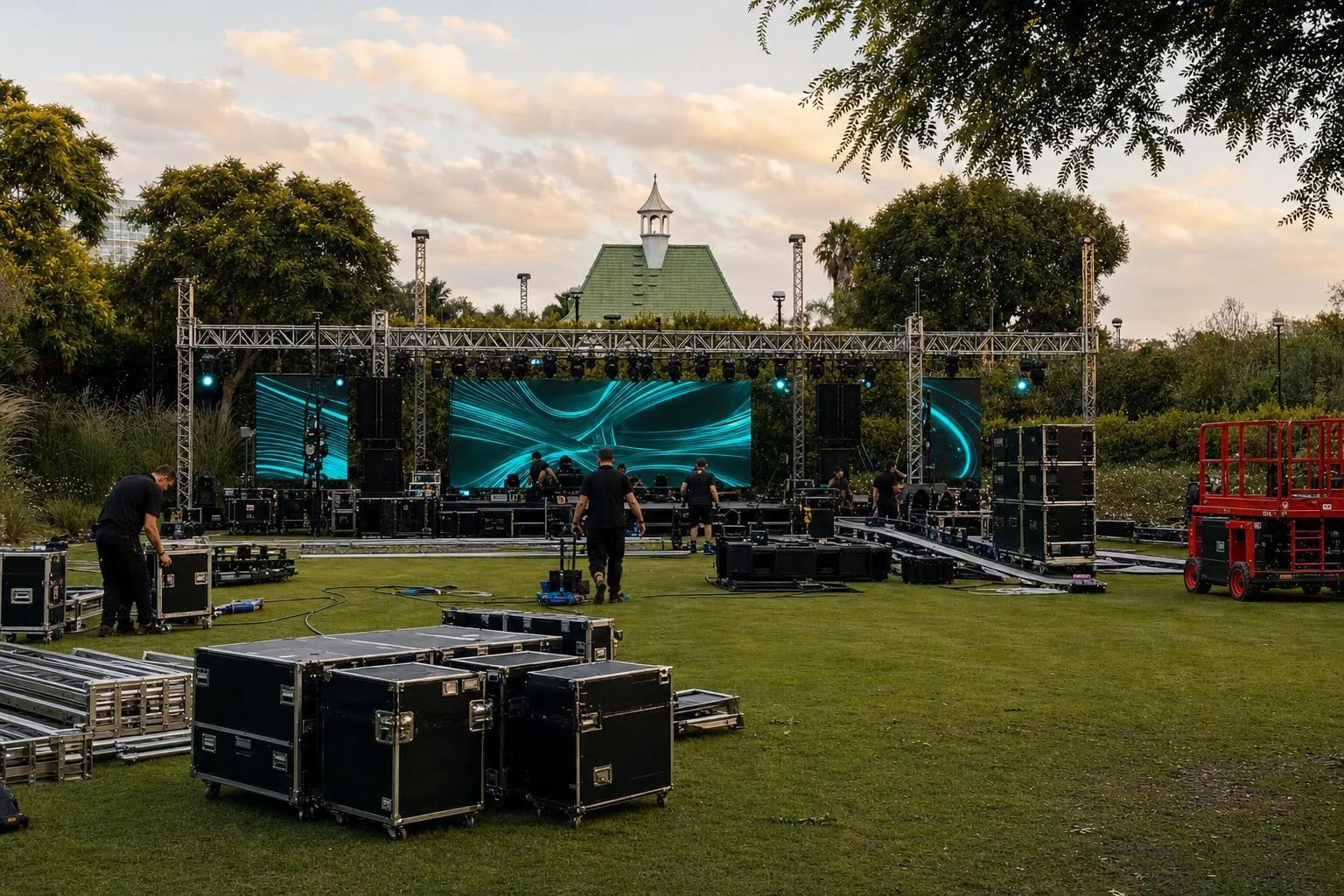
MMPAV vs. In-House Hotel AV: What Planners Need to Know
An honest side-by-side, where hotel AV works, where it doesn't, and what changes when you bring in an independent production partner.
An honest side-by-side, where hotel AV works, where it doesn't, and what changes when you bring in an independent production partner.
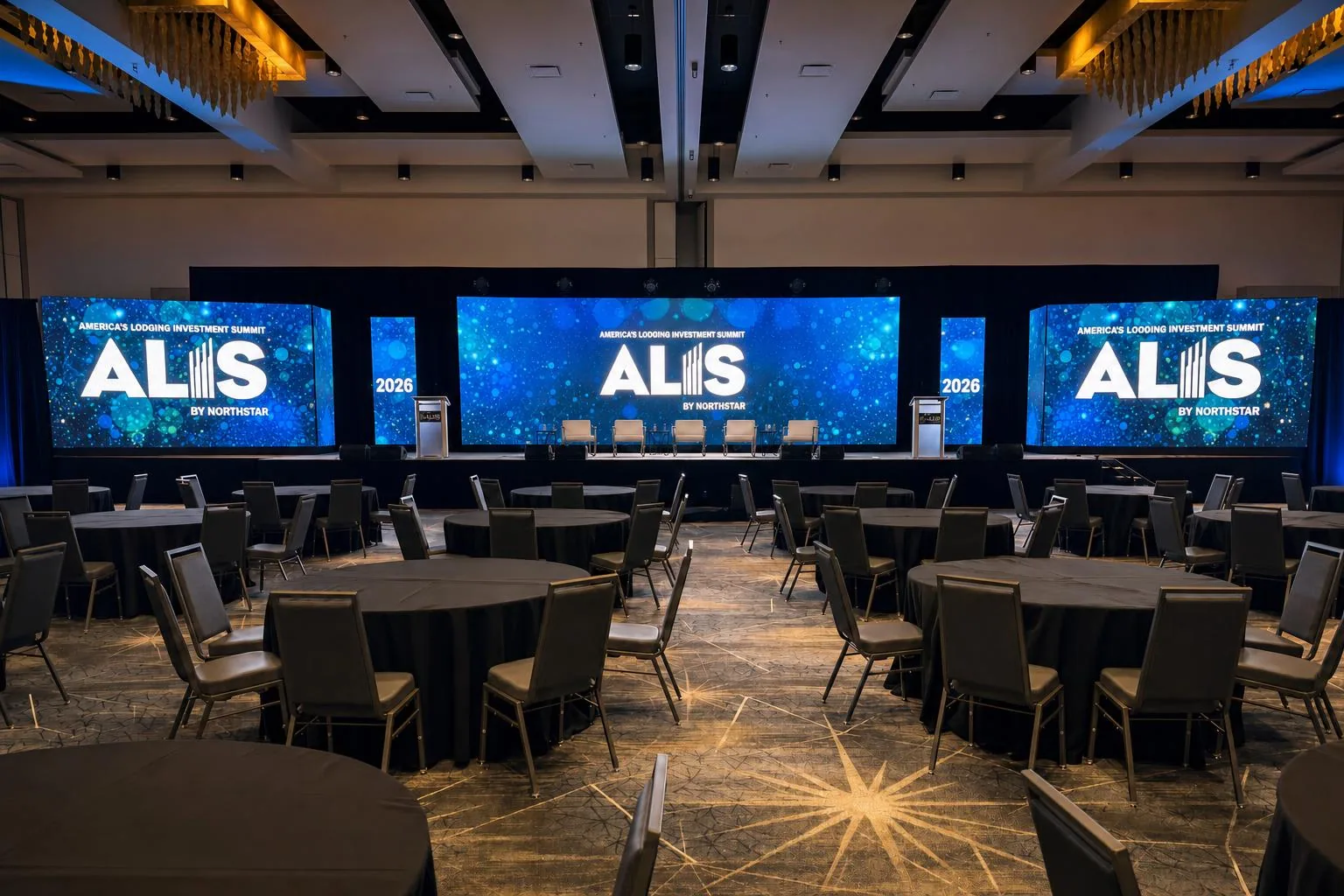
Most corporate event planners start with the venue's in-house AV team. It's the path of least resistance, they're already there, the venue recommends them, and the proposal shows up without much effort on your part.
For small meetings and simple setups, in-house AV works fine. We'll say that clearly right now. If you're running a 50-person board meeting with a projector and two wireless mics, the hotel's AV team can handle that without any issues.
But as events grow, as the production complexity increases, as hybrid needs emerge, as the budget starts accumulating line items you didn't expect, the in-house model starts to break down. And it breaks down in ways that aren't obvious until you've been through it a few times.
Here's a fair comparison across the areas that actually matter.
| In-House Hotel AV | Independent Partner (MMPAV) | |
|---|---|---|
| Crew | Assigned from rotation, may change event to event | Named team assigned at booking, same people every time |
| Pricing | Equipment list with markups, add-ons common | Line-by-line with every item explained, no hidden fees |
| WiFi | Venue charges $40K-$100K for event bandwidth | MMPAV deploys its own private network (free Spring 2026) |
| Technology | Venue's inventory, may be older or limited | Company-owned, latest equipment, no compromise on specs |
| Incentive | Venue profits from WiFi and equipment markups | Production partner profits from the event going well |
| Flexibility | Must work within venue's systems and schedule | Brings own infrastructure, adapts to any venue |
| Relationship | New crew each event, starts from scratch | Multi-event partnership, learns your brand over time |
We're not going to pretend that in-house hotel AV never makes sense. It does, in a few specific situations:
If your event falls into any of these categories, the in-house team is a perfectly reasonable choice.
The problems start showing up as events get larger, more visible, or more complex. Here's what we hear from planners who've experienced both sides:
In-house hotel AV teams rotate crew based on availability. The technician who did your event last year probably won't be the same person this year. That means:
An independent production partner assigns a named team at booking. The same crew works every event. After the second event, they already know how you operate.
In-house AV proposals are often structured around equipment lists with per-item pricing and markups. The markup on a wireless microphone might be 3-5x the rental cost. A projector that costs the company $200/day to own shows up on your invoice at $1,500/day.
More importantly, the WiFi line item is separate, and it's often the single largest charge. When all the numbers are disaggregated, it's hard to see the total picture and even harder to compare against an outside vendor's all-inclusive proposal.
The question isn't whether hotel AV is "good enough." It's whether the money you're spending is giving you the best possible event.
In-house teams work with the equipment the venue owns. If their LED wall is a few years old, that's the LED wall you get. If their streaming setup is a single camera and a laptop, that's your hybrid event.
Independent production companies bring their own equipment, and they invest in it because their reputation depends on it. The result is access to current technology without being limited by what a venue purchased three years ago.
This is the most important difference, and the least discussed.
A venue makes money from WiFi charges, equipment markups, and service fees. Their financial incentive is to charge you for everything, including bandwidth on infrastructure they already built and paid for.
An independent production partner makes money when you book them again. Their incentive is to make your event exceptional, because that's how they earn the next one. There's a reason the best production partnerships span years, not events.
If you're reading this, you're probably past the stage where a projector and two mics are enough. You're planning something that matters, something with visibility, with a budget worth protecting, with an experience you want people to talk about.
The question worth asking isn't "Is the hotel AV team good enough?" It's "Is the money I'm spending giving me the best possible event?"
When you add the WiFi fee, the equipment markups, and the service charges together, and then compare that to what an independent partner delivers at the same total cost, the answer is often different from what you'd expect.
At MMPAV, we're biased. We believe the independent model works better for events that matter. But we also believe in being honest about when it doesn't, which is why we said above that hotel AV works fine for small, simple setups.
For everything else? We think a conversation is worth 15 minutes of your time.
Our WiFi Savings Calculator shows the before-and-after for your specific event, venue type, attendee count, and what the savings become in production upgrades.
Try the Calculator →15 minutes. No pitch. Just a real conversation about what your next event could look like.
Talk to Mike →