AV Rental Company vs. Production Partner: What's the Difference?
One shows up with equipment. The other shows up with a plan. Here's why it matters for your event.
One shows up with equipment. The other shows up with a plan. Here's why it matters for your event.
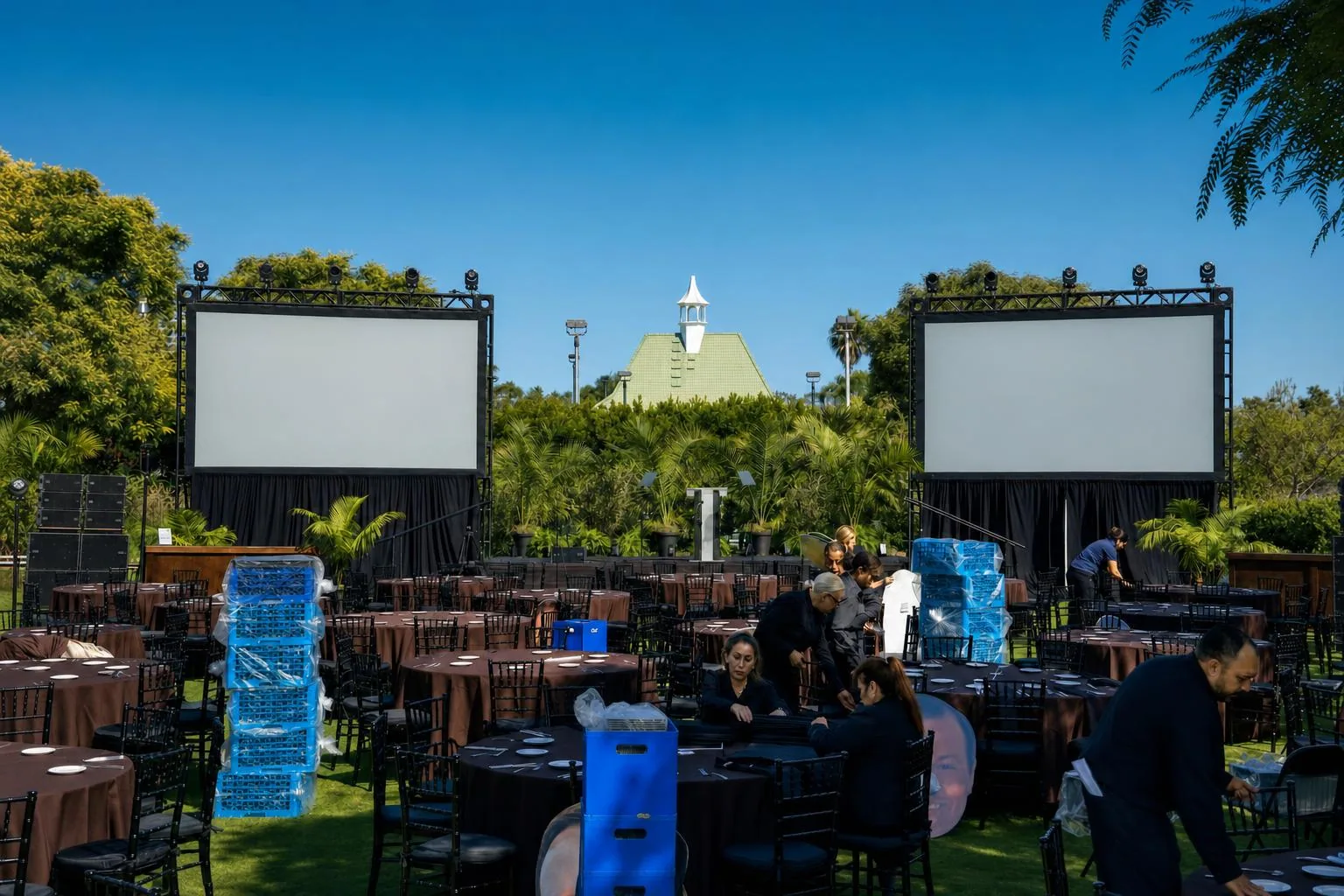
The corporate event industry uses "AV company" as a catch-all for two very different businesses. One rents you equipment. The other produces your event. They both show up in a truck. The similarity ends there.
Understanding which one you're hiring - before you sign the contract - is the difference between an event that runs itself and one where you're troubleshooting audio feedback during your CEO's keynote.
An AV rental company is, at its core, a warehouse with a delivery service. They own equipment - speakers, microphones, projectors, screens, lighting fixtures - and they rent it to you for a day, a weekend, or a week.
Here's what that typically looks like:
The rental model is transactional. You're paying for gear and labor hours. The company's job is done when the equipment is working. What happens during your event is your responsibility.
A rental company's success metric is: did the equipment work? A production partner's success metric is: did the event work?
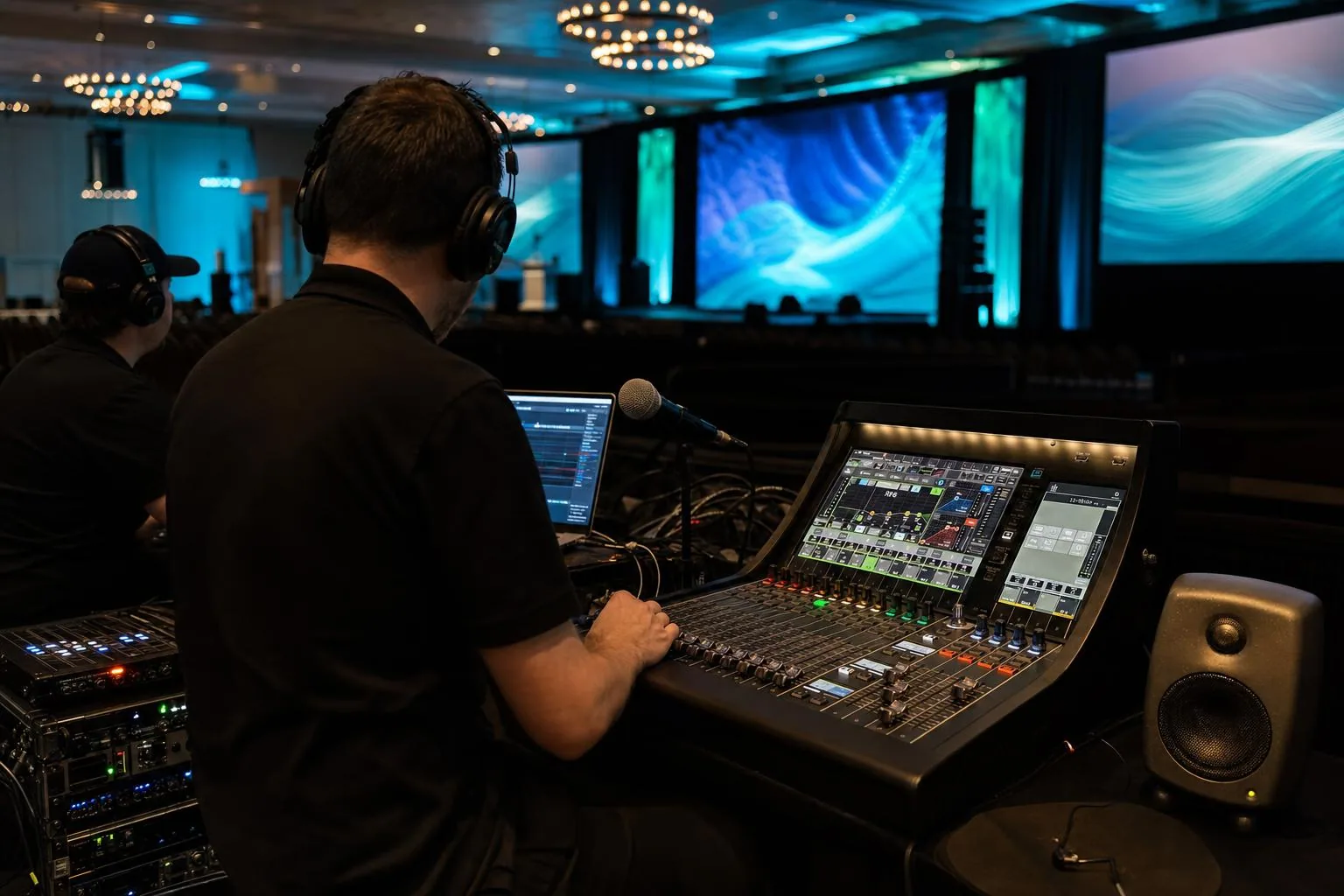
A production partner starts where the rental company stops. Equipment is just the raw material. The actual service is designing, engineering, crewing, and executing your event's technical production.
Here's what that looks like:
The production model is relationship-based. Your production partner's reputation lives or dies by how your event feels to your audience. That's a fundamentally different incentive than whether a speaker was plugged in correctly.
| Factor | AV Rental | Production Partner |
|---|---|---|
| Starting point | Equipment list | Event goals and audience |
| Crew | Setup techs, often rotated | Named engineers, same team each event |
| Design | Standard packages | Custom to your event, venue, and brand |
| On-site presence | May leave after setup | Full crew from load-in to strike |
| Problem solving | "Call our help desk" | On-site engineer handles it in real time |
| Communication | Order → confirm → deliver | Discovery → design → rehearse → execute |
| Post-event | Final invoice | Video deliverables, debrief, planning notes |
| Pricing | Lower upfront, add-ons accumulate | Higher upfront, all-inclusive scoping |
| Best for | Simple setups, small meetings | Conferences, galas, high-stakes events |
Let's be honest - not every event needs a full production partner. A rental company makes sense when:
A production partner becomes essential when the stakes go up:
Yes, a production partner costs more upfront than a rental company. There's no getting around that.
But the comparison isn't apples to apples. When you look at what the rental quote doesn't include - design time, named crew, on-site engineering, rehearsal, post-event deliverables, real-time problem solving - the gap narrows considerably.
And the gap disappears entirely when you factor in risk. A production partner's job is to make sure nothing goes wrong. A rental company's job is done when the equipment is dropped off. The cost of a keynote with audio feedback, a livestream that buffers during the Q&A, or a lighting mistake during the award ceremony - that cost is never on the invoice, but your audience remembers it.
The cheapest AV option and the most cost-effective AV option are almost never the same thing.
During your first conversation with any AV company, pay attention to what they ask:
A rental company asks:
A production partner asks:
The questions tell you everything about the relationship you're entering. One is filling an order. The other is solving a problem.
15 minutes on the phone and you'll know whether we're the right fit. We'll ask about your event, not read a price list.
Let's Talk →15-minute call. No pitch. Just a conversation about your event and the numbers that actually matter.
Let's Talk →Currently accepting Spring 2026 events