How to Plan a Conference Highlight Reel That Actually Gets Used
The footage that sells next year only exists if you plan for it. Here's the pre-event plan that turns one conference into a reel people actually share.
The footage that sells next year only exists if you plan for it. Here's the pre-event plan that turns one conference into a reel people actually share.
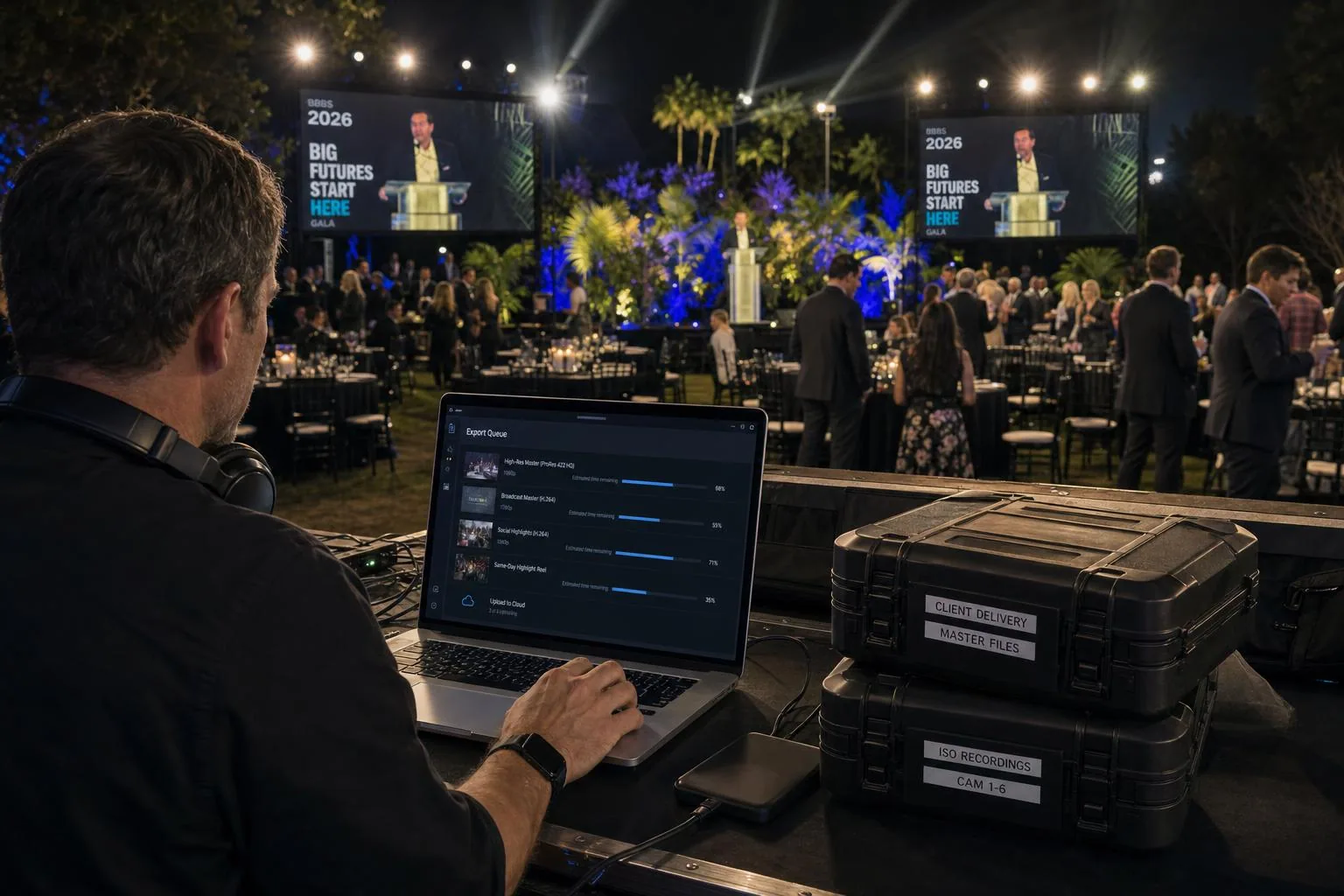
I get the same phone call every spring.
A marketing lead from a conference that wrapped a month ago. The event went great. The keynote landed. The room was electric. And now they want a highlight reel that captures all of it, so they can sell next year's registration.
Then they send over the footage.
It's two cameras locked on the stage. No crowd. No reactions. No interviews. The energy everybody remembers is nowhere on the cards. And I have to tell them the truth: the reel they're describing was decided before the doors opened, not in the edit. We can't cut footage that nobody shot.
After 28 years of doing this, here's the one thing I want every event team to understand. A great highlight reel is a planning document, not an editing miracle. So let's build that plan.
Because the best footage is unrepeatable, and 85% of deeply engaged attendees said they were more likely to purchase, according to Spiro's Experiential Marketing Impact Report (Spiro, EMIR 2026). That engagement only shows up on camera if a crew was positioned to catch it. Plan the coverage first, or lose the footage forever.
Think about what makes a reel sell. It isn't the slide deck. It's the moment the room laughed, the hands that went up, the face of an attendee who clearly didn't want to be anywhere else. Those moments happen once. If no camera is pointed at the crowd when they happen, they're gone.
Here's the part most teams miss. The run of show is the master document for your video plan. Camera positions, interview slots, and reaction captures all hang off the agenda. Lock the agenda without a video team in the room, and you've quietly capped what your reel can ever contain.
So the first move isn't hiring an editor. It's bringing your video production team into the planning conversation while the agenda is still a draft. That's when a thin, deliberate shot list gets built around the moments that actually matter.
Aim for 60 to 120 seconds, and here's the surprise: that's a planning decision, not an editing one. TechSmith's 2024 Video Viewer Trends Report found 50% of people prefer 30 seconds or less when learning about a general topic (TechSmith, 2024 Video Viewer Trends Report). A highlight reel is general-topic FOMO content, so short wins.
Here's the insight most teams miss. They treat reel length as something the editor fixes later. It isn't. A short, punchy reel comes from a thin shot list, where you decide in advance which three or four peak beats earn a place and which 90% of the day does not. You're choosing what not to shoot.
In my experience, the long, bloated reels happen when nobody made that call up front. The crew films everything, the editor tries to honor it all, and you end up with a four-minute montage that nobody finishes. A thin plan forces discipline. Pick the open, the peak keynote moment, the crowd reaction, and the close. That's a reel people watch to the end.
Five things, and all of them die if the agenda gets finalized first. Spiro's 2026 report found 85% of deeply engaged attendees were more likely to purchase (Spiro, EMIR 2026), so participation footage is the asset that drives intent. Here's the pre-event checklist that protects it.
Walk the agenda and mark the beats that matter: the keynote reveal, the demo, the award, the standing ovation. Those are your reel. Everything else is B-roll. Name the peaks before load-in so a camera is ready when each one hits.
Authentic soundbites don't happen by accident. Block real time on the agenda for two or three short interviews with speakers, sponsors, or standout attendees. If it isn't on the schedule, it won't happen, and you'll be chasing people in a parking lot.
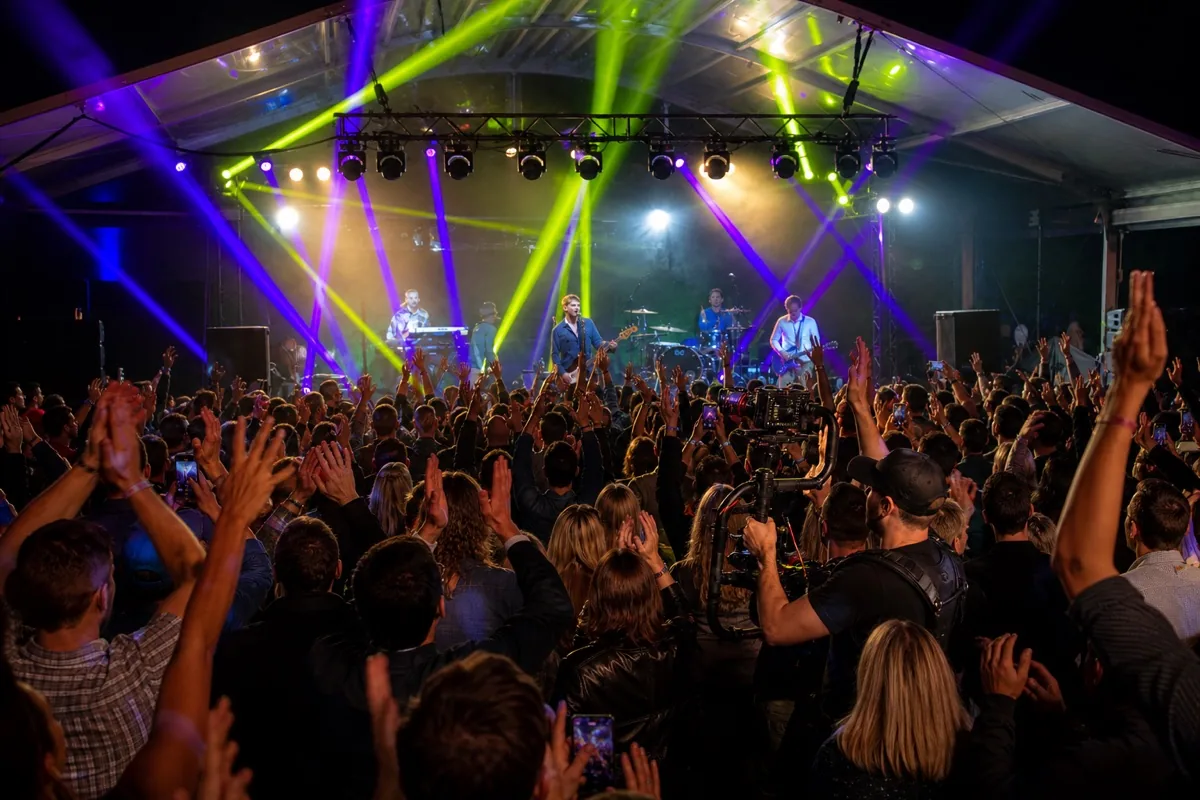
One camera on the stage gives you a recording. A second on the crowd gives you a reel. The crowd is where the energy lives: the reactions, the laughter, the hands in the air. Position for both, every time.
Decide in advance where genuine reactions will happen and who's filming them. A roaming camera near the front rows during the peak keynote moment is worth more than any staged shot. Plan the position, not the performance.
The registration buzz, the networking, the branded space. This is the connective tissue that makes a reel feel like an experience instead of a recording. It's easy to grab, but only if someone is assigned to grab it.
We plan camera positions, interview slots, and reaction captures around the reel you want to publish, then deliver a highlight reel and recap, often same week.
See How We Plan the Reel →Yes, and the data on why is specific. Spiro's 2026 report found 44% of attendees who shared their experience on social did so because a moment was surprising, striking, or emotionally resonant, while 28% who didn't share said it simply wasn't top of mind (Spiro, EMIR 2026). A reel manufactures both the resonance and the reminder.
Events are a serious revenue engine now, and there are more of them. Splash's 2025 Outlook on Events found 88% of marketers identify events as a key revenue driver, and marketers ran about 29 events in 2024, up from about 14 in 2023 (Splash, 2025 Outlook on Events). With that many events competing for attention, a reusable reel keeps one of them selling all year.
So the reel does two jobs at once. It's the FOMO that makes a hesitant prospect register, and it's the proof that last year was worth the trip. Both jobs depend on the reel containing real moments, the surprising and resonant kind, not a stage recording set to music.
The reel that sells next year isn't a recording of the stage. It's a record of the room reacting to it.
You plan them and you prompt them, because reactions are engineered, not found. Spiro's 2026 report found the top reason attendees shared was a surprising or resonant moment (44%), and the top reason they didn't was that it wasn't top of mind (28%) (Spiro, EMIR 2026). Both numbers are levers you can pull in advance.
The best attendee footage I've ever captured was never spontaneous in the way people assume. We built a designed moment into the agenda, a reveal that we knew would land, then we stationed a roaming camera near the people most likely to react. The reactions were real. The opportunity was manufactured.
Here's the three-part recipe. First, build one genuinely surprising or emotionally resonant moment into the program, because that's the 44% lever. Second, give attendees a single, easy prompt, a question to answer on camera or a wall to react against, so the reaction has somewhere to go. Third, solve the 28% "not top of mind" problem by making participation the path of least resistance.
This is the same thinking behind strong content creation generally: the candid-looking footage that performs best is almost always the result of someone designing the conditions for it. You don't fake the reaction. You set the table for it.
Because the highest-value footage is unrepeatable, and no editor can cut what was never shot. Video keeps proving its worth, with 93% of video marketers saying video has helped increase brand awareness, per Wyzowl's Video Marketing Statistics 2026 (Wyzowl, 2026). But that value depends entirely on the right footage existing in the first place.
Let me be blunt about what "fix it in the edit" really means. It means hoping the genuine reaction, the peak-keynote crowd shot, the unguarded interview, all happened to land on a card. If the cameras weren't positioned and the interviews weren't scheduled before the run of show locked, those moments are on no shot list anywhere. The edit can only arrange what was captured.
This is why I push so hard on the planning conversation. A same-week turnaround on a highlight reel and recap is completely doable, but only when the plan was right going in. The teams that get a reel they're proud of are the ones who treated the shot list as seriously as the speaker lineup. The teams that get a stage recording treated video as something to figure out later.
Don't be the second team. The reel is too important to leave to luck and an editor's mercy.
Aim for 60 to 120 seconds for the primary promo cut. TechSmith's 2024 Video Viewer Study found 50% of people prefer 30 seconds or less when learning about a general topic, and a highlight reel is general-topic FOMO content. That length only works if you plan a thin shot list of a few peak beats, not a long one.
Lock a shot list tied to peak moments, scheduled interview slots, B-roll, planned attendee-reaction captures, and camera positions covering both stage and crowd, all before the run of show is finalized. Engagement and participation footage ties to higher purchase intent, with 85% of deeply engaged attendees more likely to purchase (Spiro 2026), and it can't be invented later.
Yes, because it's social proof and FOMO. Spiro's 2026 report found 44% who shared did so because a moment was surprising or emotionally resonant, while 28% who didn't said it "wasn't top of mind." With marketers running about 29 events a year (Splash 2025), a reusable reel keeps one event selling all year long.
The highest-value footage is unrepeatable: genuine reactions and peak-keynote crowd shots. If cameras aren't positioned and interviews aren't scheduled before the run of show locks, those moments land on no shot card. No editor can cut footage that was never captured, which is why a deliberate plan beats a rescue mission every time.
Plan and prompt them. Spiro's 2026 report found the top reason attendees shared was a surprising or resonant moment (44%), and the top reason they didn't was that it wasn't top of mind (28%). Build a designed moment into the agenda, station a roaming camera near the crowd, and give attendees one easy prompt so the reaction has somewhere to go.
You don't need more cameras. You need a plan that exists before the agenda locks.
The conferences that walk away with a reel people actually share aren't lucky. They decided what the reel needed, a thin set of peak moments, real reactions, scheduled interviews, then built the shot list and camera plan to capture exactly that. The footage that sells next year was protected before the doors opened.
So before your next event, bring video into the room while the run of show is still a draft. Ask what the reel needs to contain, then plan backward from there. That single conversation is the difference between a highlight reel and a stage recording.
And if you want a partner who builds that plan with you, that's exactly what we do. For the bigger picture on event video, start with our complete guide to corporate event video production.
15-minute call. No pitch. Just a conversation about your conference and the reel you want to walk away with.
Let's Talk →Currently accepting Spring 2026 events